



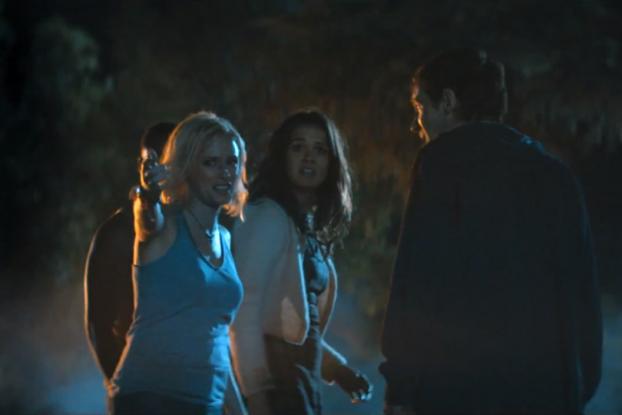
This past week, as trick-or-treaters gleefully popped up around neighborhoods, I found myself reflecting on how much of Halloween's imagery has evolved. What once centered around simple ghosts, witches, and black cats has become filled with ever more graphic depictions of zombies, chainsaws, masked figures, and scenes straight out of horror movies. These modern tales often revolve around a familiar trope: an unstoppable villain chasing terrified characters as they make one bad decision after another.
Even Geico picked up on this cliché in one of its commercials. A group of frightened teens, clearly being hunted by a horror-movie villain, debate where to hide. One points to a running car and pleads, "Why don't we just get in the running car?" The others immediately dismiss the idea and decide instead to hide in a barn…behind a wall of chainsaws. The camera pans to the masked killer, who stares in disbelief and shakes his head in disapproval. The ad concludes with the line: "When you're in a horror movie, you make poor decisions. That's what you do." It's funny because it's true. We often see what's right in front of us and still make choices that defy logic.
This week's parashah, Vayeira, contains one of the most difficult and haunting stories in our tradition: the Akeidah, the Binding of Isaac. We know the story from Abraham's point of view: the test of faith, the painful obedience, the last-minute reprieve. But what about Isaac?
We rarely pause to consider Isaac's role, his awareness, or his response. Did he struggle? Did he fight back? Did he question his father? The Torah is silent on these points, and that silence is deafening.
Unlike the characters in our horror stories, Isaac doesn't run. He doesn't cry out or resist. Instead, the text describes him as a participant. He carries the wood; he speaks calmly to his father, and when Abraham binds him, there's no mention of protest. It's as if Isaac sees the "running car," the possibility to flee, but chooses a different path.
Perhaps Isaac's lack of resistance wasn't passivity; it was trust. In a moment that seems to defy reason and survival instinct, Isaac chooses faith over fear. Where the Geico teens choose panic and poor judgment, Isaac embodies serenity and surrender, believing that somehow, his father's God will not abandon them both.
This isn't a model of blind obedience so much as a deep, spiritual courage. Isaac's story reminds us that faith sometimes means holding still when every part of us wants to run. It challenges us to face life's most terrifying moments not with panic, but with trust in the unseen, the divine, and in one another.
As we move from the season of spooky stories to the calm and holiness of Shabbat, may we find courage like Isaac's, to see clearly, to trust deeply, and to make good choices even when fear clouds our vision. And may we always remember that, unlike those poor horror movie characters, we do have a running car waiting for us: the stillness, renewal, and peace of Shabbat.
Shabbat Shalom,
Danny Glassman