


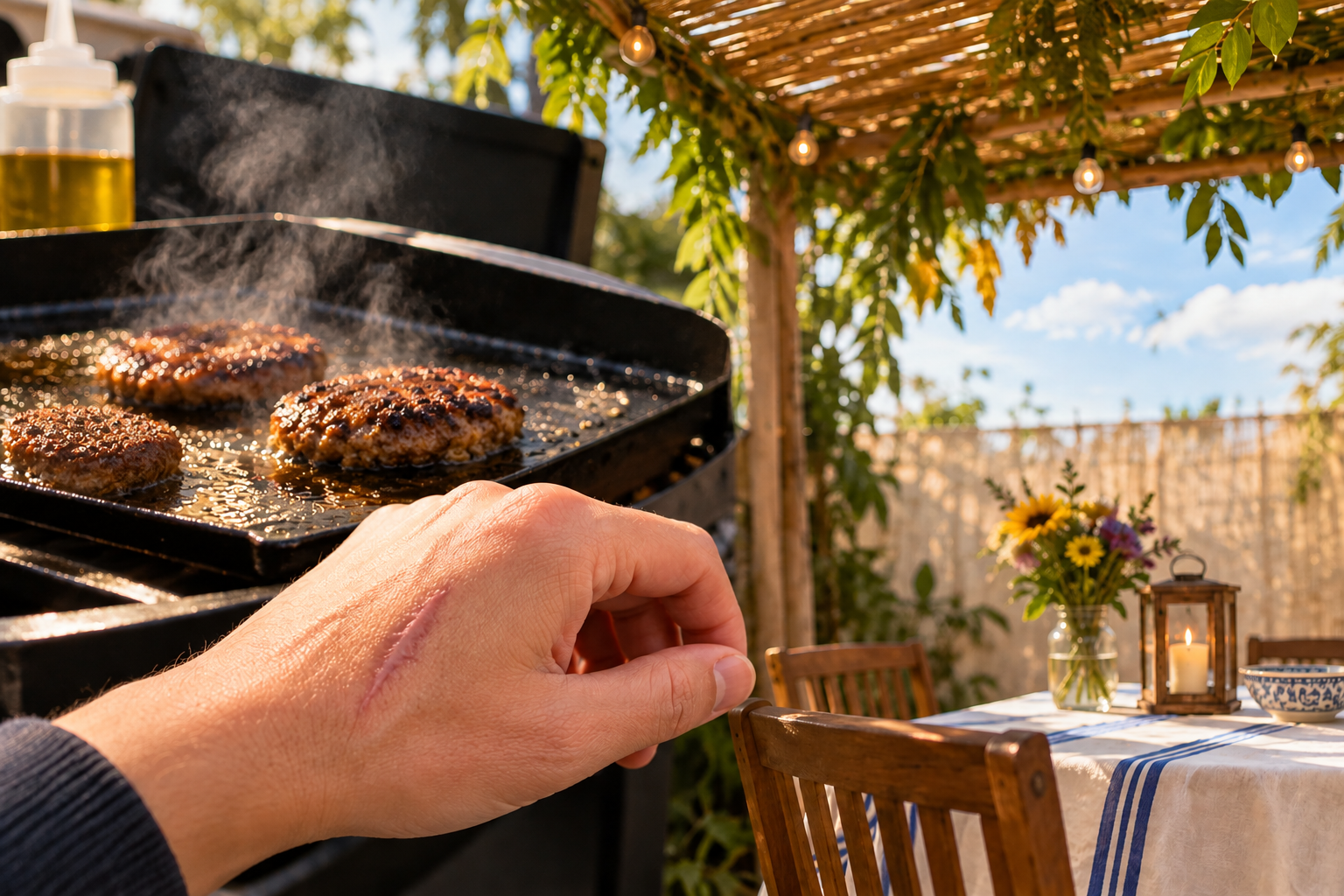
I bought myself a present this summer: a new grill. I was especially excited about one feature, the griddle. I had visions of perfect smash burgers, crispy around the edges and hot off the grill. So, naturally, I did what I thought I was supposed to do and generously oiled the griddle. A little too generously.
As the griddle heated up, hot oil started splashing everywhere. Before I knew it, some of it landed on my right hand, leaving me with a pretty significant burn. For a while, the wound was impossible to ignore. It hurt. I had to protect it, and I watched it carefully as it slowly began to heal.
Today, the wound is gone, but the scar remains. I notice it every day, and when I see it, I do not just remember the pain. I remember what I learned from it.
First, I learned that a little oil goes a long way. I also learned something more important about healing. We often imagine healing as returning to the way things were before. We want the wound to disappear. We want the pain to be gone. We want to look at ourselves and see no evidence that anything ever happened. But that is not always how healing works. Sometimes we heal, and the scar remains.
Perhaps there is wisdom in that. A scar does not mean that a wound is still open. It means that something happened there and that the body did the work of repairing itself. It is a reminder of both vulnerability and resilience.
That feels especially appropriate as we enter Sukkot. For most of the year, we build walls. We create structures that make us feel secure. We convince ourselves that if we plan carefully enough, prepare thoroughly enough, and protect ourselves well enough, we can keep uncertainty outside. Then Sukkot arrives and Judaism tells us to go outside. Leave the permanent structure behind. Sit beneath a roof through which you can see the sky. Feel the wind. Notice the temperature. Recognize that the walls around you are not as permanent as you might like them to be.
The sukkah does not pretend that we are invulnerable. In fact, it reminds us of exactly the opposite. And yet Sukkot is called z'man simchateinu, the season of our joy. Not because everything is perfect. Not because nothing has hurt us. Not because all of our wounds have disappeared. We are commanded to rejoice while sitting inside something fragile.
Maybe that is one of Sukkot's most important lessons. Joy and vulnerability do not cancel each other out, and neither do healing and scars. We can carry evidence of what we have been through and still celebrate. We can remember moments that hurt and still be grateful for where we are today. We can look at the scars, physical or otherwise, that we carry and ask not only, "What happened to me?" but also, "What did I learn? How did I grow? What do I understand now that I did not understand before?"
My hand does not look exactly the way it did before that afternoon at the grill, and that is okay. The scar tells a story. It reminds me to be a little more careful. It reminds me that mistakes can hurt. It reminds me that healing takes time. Most importantly, it reminds me that healing does not require us to erase the past. Sometimes healing means allowing what happened to become part of our story without allowing it to define the whole story.
As we enter our sukkot this year, may we bring our scars with us. May we acknowledge the places where we have been hurt, the places where we are still healing, and the lessons we have learned along the way. Beneath the fragile roof of the sukkah, may we discover that we do not need perfect walls, perfect bodies, or perfect lives in order to experience gratitude, connection, and joy.
Sometimes the scar remains. Sometimes the scar is how we remember that healing happened.
Shabbat Shalom and Chag Sameach,
Danny Glassman