


A City of Refuge Close to Home
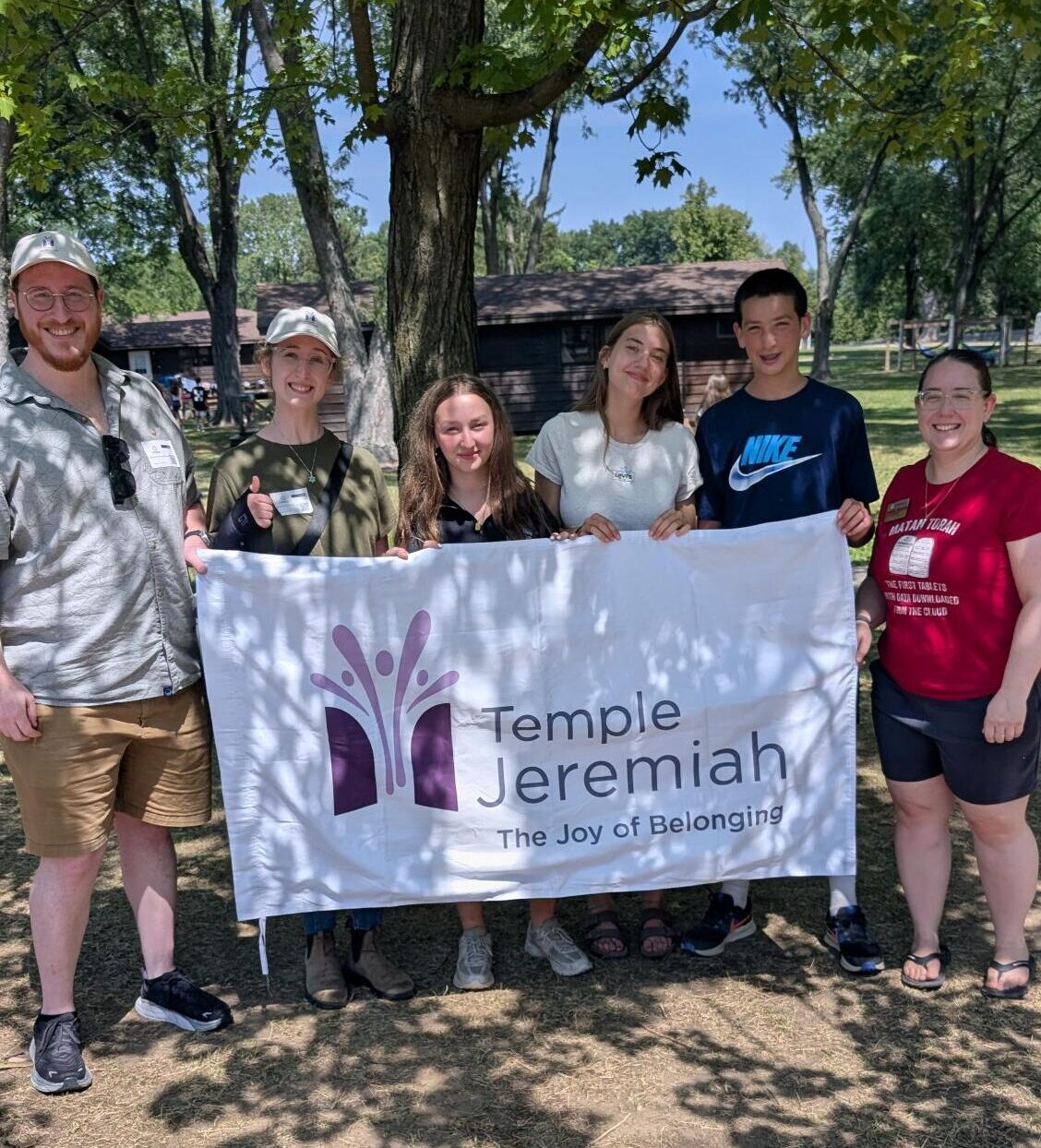
I recently returned from two wonderful weeks at OSRUI. Camp days are long—sometimes twenty hours long—and somehow every minute feels worthwhile.
I was assigned to Gesher, the middle school unit whose campers live in cabins and spend part of each day pursuing specialized intensives. Our Temple Jeremiah camper in Gesher participated in the aquatics intensive, dividing her time between the breicha, the pool, and the agam, the lake.
I also had the opportunity to connect with and support our chanichim (campers), tzevet (staff), and segel (faculty) throughout camp. That included members of our community in Chalutzim, the Hebrew immersion unit, and Moshavah, the older tent unit whose campers embark on weeklong tiyulim—adventures that include hiking, biking, and canoeing.
I love camp. Even after those very full days, though I might be physically exhausted, I return home energized and inspired. I am deeply grateful that I get to spend this time at OSRUI on behalf of our congregation.
This week's Torah portion, Shoftim, describes the arei miklat, the cities of refuge. In the Torah's vision, someone who unintentionally causes another person's death may flee to one of six designated cities and find protection from those seeking vengeance.
I studied this passage extensively in rabbinical school while exploring the idea of moral injury. We often associate trauma with psychological or neurological wounds. Moral injury describes a spiritual wound: the injury that can occur when we are forced to act against our deepest values, when we witness an injustice we cannot prevent, or when the ethics of the world around us seem irreconcilable with the values at the heart of who we are.
Through that study, I came to understand the city of refuge as a place of healing—a sanctuary for someone overwhelmed by the brokenness of the world.
But returning to Shoftim after my time at camp helped me see something more. Sanctuary does not have to be only a place we enter after we have been wounded. It can also be a place that strengthens us before a difficult moment arrives. A refuge can help us build the resilience, relationships, and sense of purpose we will need when life tests us.
In that sense, one of my cities of refuge has become Oconomowoc, Wisconsin.
At OSRUI, refuge looks like hundreds of campers and staff gathered for Shabbat song session. Unlike the jumping, crowded song sessions at many camps, OSRUI's campers remain seated by unit, singing and moving together through wonderfully coordinated dances. They clap together. They call and respond. They sing Hebrew words they have made their own. Sometimes they even use their shoes as pretend microphones.
One of the songs they sing repeats the words kol sasson v'kol simcha—"the voice of joy and the voice of gladness." These are the same words inscribed above the ark in our Golder Chapel, drawn from the blessings we offer wedding couples.
Imagine being surrounded by hundreds of young people as Shabbat begins and hearing all of them raise their voices in joy and gladness. That kind of moment does not happen accidentally. It is the result of more than seventy years of building a culture in which Judaism is expressed through music, movement, friendship, and shared purpose. It is a community that has intentionally made room for joy.
That is what a city of refuge can be.
Temple Jeremiah is not a 24/7 immersive community in quite the same way as camp. We do not begin and end our days together, sharing every meal and every moment. But we can still create a sense of immersion—even during the few seconds it takes someone to step through our doors.
We can help each person who enters find their own kol sasson v'kol simcha: their voice of joy and their voice of gladness. We can create a place where people feel safe enough to exhale, connected enough to belong, and strengthened enough to return to the world with renewed courage and hope.
This can be someone's city of refuge. And you do not have to drive an hour and a half to Wisconsin to reach it. You may only have to drive ten or so minutes to Northfield.
Every time we welcome someone, learn together, sing together, care for one another, or make room for another person's story, we help build that refuge. We create a community grounded in shared values and strengthened through relationships—a place that can hold us when the world feels overwhelming and prepare us to meet that world with compassion and conviction.
Thank you for everything you do to create that kind of community. Thank you for helping Temple Jeremiah become a place of refuge, rejuvenation, joy, and belonging.
We all need one.